
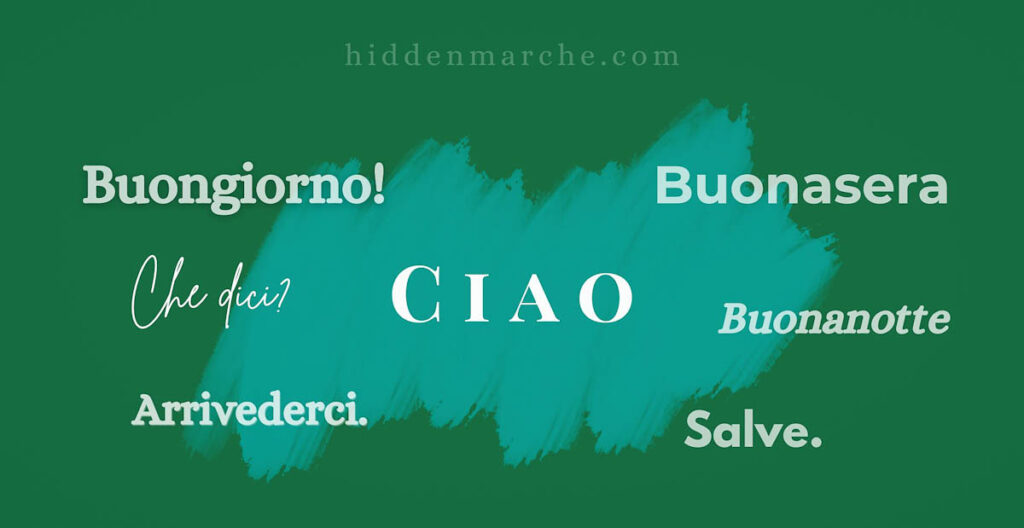
Ciao! Like in most parts of the world, greeting people in Italy is a very important part of everyday life. Italians pay attention to how you say hello and goodbye, as it sets the tone for any social or professional interaction. Learning the right greetings and gestures will help you make a good impression with your neighbours, or when you meet strangers in different social contexts.
👉 For more on social customs, see our Italian Etiquette Guide.
Common Italian Greetings
In most situations, greetings are warm and friendly. Here are the most common ones, along with their meanings and when to use them.
- Ciao – The most informal greeting. It means both “hi” and “bye.” Use it with friends, family, and people you already know well. Avoid using it with strangers, especially in formal settings.
- Buongiorno – Literally “good day.” Used from early morning until early afternoon. It’s polite and suitable in both formal and informal situations.
- Buon pomeriggio – “Good afternoon.” Used less often than “buongiorno,” but still correct, especially in formal situations.
- Buonasera – “Good evening.” Used from late afternoon until night.
- Buonanotte – “Good night.” Said only when parting for the night, not as a greeting.
- Salve – A neutral and polite alternative to “ciao.” Useful if you are unsure about the level of formality.
- Arrivederci – “Goodbye.” Polite and appropriate for both casual and formal use.
- ArrivederLa – A very formal version of “goodbye,” used with the Lei form when speaking to elders or professionals.
Greetings by Time of Day
Italians tend to choose greetings based on the time of day. Saying the right one shows respect and awareness.
- Morning: Buongiorno
- Afternoon: Buonasera
- Late night: Buonanotte
If you’re not sure, “buongiorno” is the safest option. It’s friendly but still polite enough for most occasions.
Physical Gestures and Body Language
Italians are expressive and use physical gestures naturally during greetings.
- Among friends, a quick kiss on both cheeks (starting from the left) is common.
- Men usually shake hands in professional or new situations.
- In formal contexts, nodding slightly while saying “piacere” (pleased to meet you) shows respect.
- Direct eye contact is expected—it conveys sincerity and attention.
Avoid keeping your hands in your pockets or crossing your arms during greetings; it can be interpreted as distant or disinterested.
Using Titles and Formal Address

In professional or official settings, Italians often use titles like Dottore (Doctor), Ingegnere (Engineer), or Professore (Professor) when greeting someone. This is especially common with older people or professionals.
- Example: “Buongiorno, Dottor Rossi.”
Using Signore (Mr.), Signora (Mrs.), or Signorina (Miss) also works well if you don’t know someone’s title.
In informal contexts, especially among young people, first names are perfectly acceptable.
When to Use “Lei” or “Tu”
Choosing between Lei (formal “you”) and tu (informal “you”) is essential when greeting someone.
- Use Lei with strangers, professionals, older people, or in business settings.
- Use tu with friends, family, and people your age or younger.
If unsure, start with “Lei.” Italians will let you know if it’s okay to switch to “tu” (often by saying “Diamoci del tu”).
👉 Read more in our Lei vs Tu guide.
Regional Differences and Local Nuances
Across Italy, greeting customs vary slightly. In the north, people may be a bit more formal and reserved, while in the south, greetings are more animated and physical. Regardless of where you are, a smile and a polite tone always go a long way.
Greetings in Le Marche
In Le Marche, most of the same rules apply as elsewhere in Italy. People are generally friendly but slightly reserved at first. In rural areas, especially in smaller villages, you might encounter someone who doesn’t immediately respond to your greeting. This is not necessarily rudeness, it’s often just local habit. Many residents prefer to skip the formalities and get straight into conversation once they recognize you or feel comfortable.
In towns and coastal areas, greetings are typically warmer, especially among shopkeepers and locals who interact with visitors regularly.
Key Takeaways
- Use buongiorno, buonasera, and ciao appropriately depending on time and context.
- Be polite and observant; Italians value respectful greetings.
- Learn when to use Lei versus tu to match the level of formality.
- Physical gestures like handshakes or cheek kisses are common once familiarity is established.
- In Le Marche, greetings may feel more reserved at first but become warm over time.
- A correct greeting shows cultural understanding and helps you connect naturally in daily life.
- Want to sound more Italian? Listen to the pronunciation clips under each greeting to master tone and rhythm — recorded by native speakers from Le Marche.
Related Articles:
• How to ask for directions in Italy.
• Most common conversation topics in Italy.
• How to reserve at restaurants.