

In Italy, certain legal transactions cannot happen without the intervention of a notaio (notary). This professional is a public officer with specific responsibilities defined by law.
If you are a foreign buyer interested in purchasing a property in Italy, understanding what a notaio does is essential. The notary ensures the legality of the process, protects both parties, and guarantees that the transaction is properly recorded.
👉 Related: Foreign Buyer Practicalities: Residency, Visas, Inheritance
Table of Contents
- The Role of a Notaio
- Requirements to Become a Notaio
- Most common acts that require a notaio:
- Notaio and Property Transactions
- Who Pays the Notary Fees?
- When to Contact a Notaio
- Practical tips:
- Beyond Property: Other Uses of a Notaio
- Key Takeaways
The Role of a Notaio
A notaio is not a lawyer working for one party. Instead, they act as a neutral public officer who represents the state and ensures the transaction respects the law. Their job is to give public validity (pubblica fede) to contracts and deeds.
Without a notaio, these transactions are not valid. This makes them one of the most important professionals you will deal with in Italy.
Requirements to Become a Notaio

The path to becoming a notaio in Italy is highly competitive. After a law degree, candidates must pass a public exam with notoriously low pass rates. Once admitted, they are assigned to a specific geographical area where they can practice.
Most common acts that require a notaio:
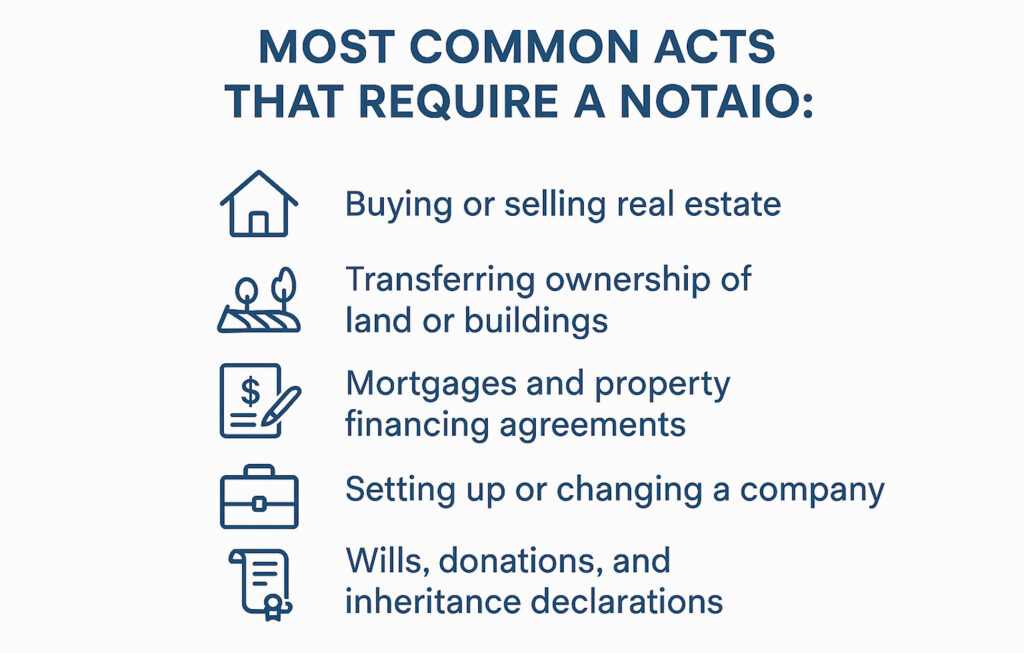
- Buying or selling real estate
- Transferring ownership of land or buildings
- Mortgages and property financing agreements
- Setting up or changing a company
- Wills, donations, and inheritance declarations
Notaries are bound by strict rules of conduct and have a duty of impartiality. Their role is not to maximize the benefit of one party but to make sure that the law is respected and the contract is clear to everyone involved.
Notaio and Property Transactions
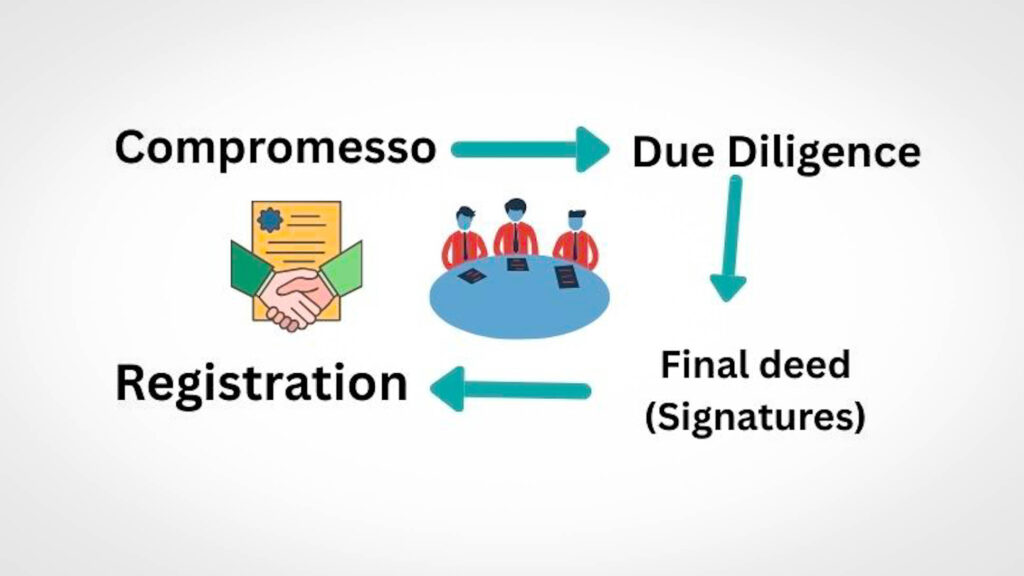
If you are buying property in Italy, you cannot complete the purchase without a notaio. They are responsible for drafting and authenticating the final deed of sale (rogito notarile).
Here is how they fit into the process:
- Preliminary Contract Check – Although the compromesso (preliminary contract) can be signed privately, many buyers involve the notary early to review it.
- Due Diligence – The notary verifies that the seller is the legal owner, checks for mortgages, liens, or debts attached to the property, and confirms that planning permissions and cadastral records (catasto) are accurate.
📌 Related: Italian Property Offices Explained: Catasto & Conservatoria - Drafting the Final Deed – At the signing, the notary reads the contract aloud (a legal requirement), ensures both parties understand, and certifies the signatures.
- Registration – After the sale, the notary registers the deed with the relevant offices and updates the land registry.
Without these steps, the purchase would not be legally recognized.
Who Pays the Notary Fees?
In most cases, the buyer pays for the notaio. Fees are set by law but can vary depending on the value of the property and the complexity of the transaction. Expect to pay between 1% and 2.5% of the purchase price, plus VAT and administrative costs.
Notary fees are part of the overall transaction costs, along with taxes and registration fees. Choosing the right notary is important: while impartial, some notaries are more experienced with foreign buyers and can provide additional guidance.
When to Contact a Notaio

It is best to get in touch with a notaio before signing any binding agreement. Many foreign buyers wait until the final signing, but involving the notary earlier avoids costly surprises.
Practical tips:
- Contact at least two notaries to compare availability and fees.
- Ask whether they have experience with international clients.
- Provide documents well in advance (passport, codice fiscale, proof of funds, seller’s property documents).
Beyond Property: Other Uses of a Notaio
Although property purchases are the most common situation for foreigners, the notary also plays a role in:
- Certifying a will drafted in Italy
- Accepting or renouncing an inheritance
- Legalizing a donation between family members
- Incorporating a company or making changes to a business
For each of these, the notary ensures the document is binding and valid under Italian law.
📌 Related: What Is Commercialista and Why You May Need One in Italy
Key Takeaways
The notaio is a cornerstone of the Italian legal system. If you are buying property, you cannot avoid their involvement. They protect the law, ensure the transaction is secure, and handle all the official registrations. For buyers, this means peace of mind and legal certainty.