
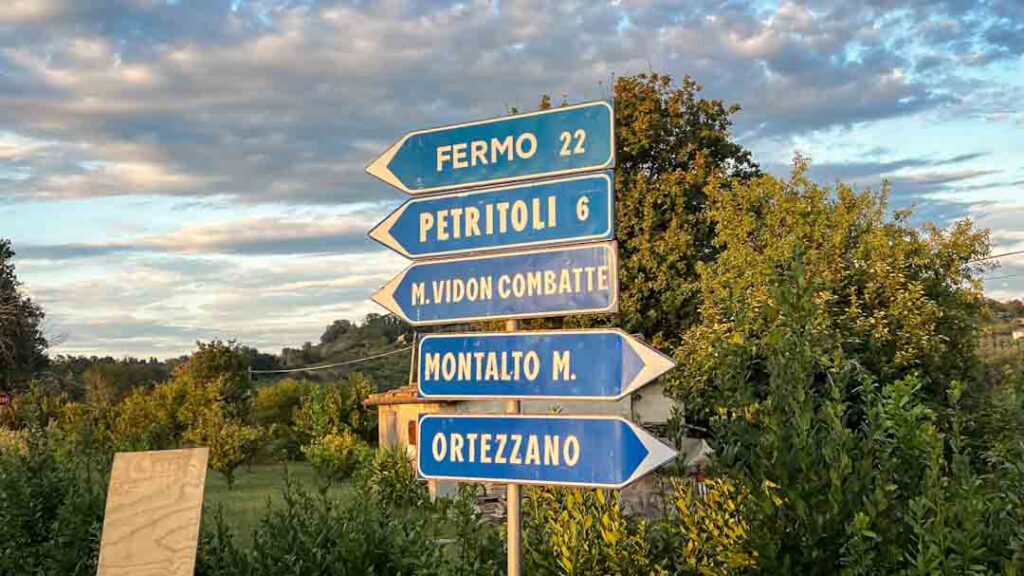
Finding your way in Italy can be part of the adventure, especially if you’re exploring smaller towns and villages. Trying to speak a little Italian in these situations can be a way to connect. Even if you make mistakes, locals will usually appreciate the effort. You can always check your route on an app, but asking someone for help opens the door to a chat, and possibly a story about the place you’re in.
👉 For a broader overview of Italian customs, see our guide: Italian Etiquette Guide.
Common Phrases for Asking Directions
Here are a few essential sentences you can use when you’re lost or looking for a place:
- Scusi, si può parcheggiare qui? – Excuse me, can I park here?
- C’è un bar qui vicino? – Is there a bar nearby?
- Quanto manca per la piazza? – How far is it to the main square?
- Dove si trova la stazione? – Where is the station?
- È lontano da qui? – Is it far from here?
- Mi può aiutare, per favore? – Can you help me, please?
You’ll notice that Italians often use Scusi (formal) or Scusa (informal) before asking a question. Using the polite form Scusi is safer when speaking to someone you don’t know, especially older people or anyone in a position of authority.
When and How to Ask
Italians are generally happy to help if you ask politely. If you stop someone on the street, make brief eye contact and start with a greeting like Buongiorno or Buonasera before asking your question. In smaller towns, friendliness goes a long way, and locals often walk with you part of the way to show you where to go.
In busier cities like Rome or Milan, people are often in a hurry. Keep your question short, and don’t take it personally if they just point rather than explain. Using simple words and gestures usually works better than long sentences.
Understanding the Answers
Italians often use hand gestures and landmarks instead of street names. You might hear phrases like:
- Di là (that way)
- Giri a destra (turn right)
- Sempre dritto (straight ahead)
- È dietro l’angolo (it’s around the corner)
Sometimes the answer includes distance estimates like cinque minuti a piedi (five minutes on foot) or due chilometri (two kilometers). Remember, Italian “five minutes” might be more of a friendly guess than an exact measure.
Asking for Help in Shops or Cafés
If you’re unsure where something is, don’t hesitate to step into a bar or shop and ask the staff. Italians working in cafés or local stores often know the neighborhood well and are used to helping tourists. You can start with:
- Mi scusi, sa dove si trova…? – Excuse me, do you know where … is?
- Come arrivo a…? – How do I get to …?
It’s also polite to say Grazie mille (thank you very much) afterward — gratitude goes a long way.
In Rural Areas and in Le Marche
In regions like Le Marche and other rural parts of Italy, people may take a more personal approach. Don’t be surprised if someone gives very detailed explanations or insists on accompanying you halfway. In some small villages, signs can be limited, so locals rely on landmarks rather than street names. A few Italian words and a friendly attitude will always help you get where you need to go.
Practical Tips
- Keep a map or navigation app on your phone for confirmation, but don’t rely on it alone — signal can be unreliable in rural areas.
- Always approach politely and wait for a response before asking.
- In busy tourist towns, staff at information points or local bars are often your best resource.
- If you’re driving, look for cartelli marroni (brown tourist signs), which indicate landmarks and points of interest.
Key Takeaways
- Italians appreciate politeness — always start with Scusi or Buongiorno.
- Use short, clear phrases and don’t be afraid to combine words with gestures.
- Locals may explain using landmarks rather than street names.
- In small towns, patience and friendliness open many doors — sometimes literally.
Related Articles:
• How to behave at markets in Italy.
• Most common conversation topics in Italy.
• How to reserve at restaurants.