
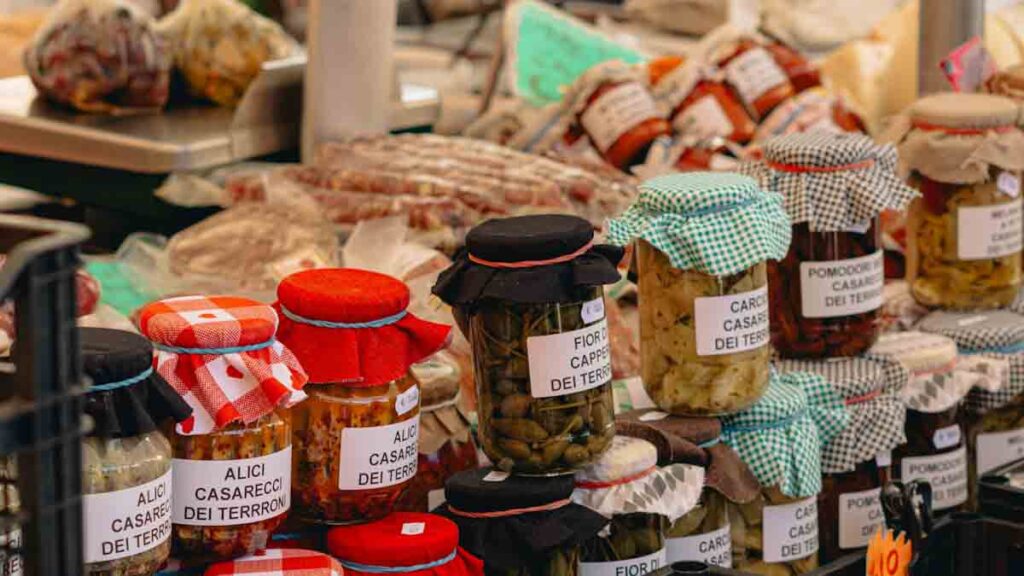
Markets in Italy are a tradition in nearly every town. Usually held on a fixed day of the week, in the morning. You’ll find clothes, food, household items, sometimes even antiques. In Le Marche, big open-air markets in places like Civitanova or Porto San Giorgio offer a bit of everything: socks, underwear, fast fashion, second-hand goods, new brand items, and local food.
This article shows how to walk through markets with respect, how to spot good produce, when to bargain, and what to watch out for (yes, counterfeit goods exist).
👉 For more on Italian culture and public life, see our article: Italian Etiquette Guide.
Market Basics and What to Expect
- Markets often start early — 7:00 to 8:00 a.m. — and wrap up by midday.
- Some days are special: for example, a “weekly market day” when many more stalls come in.
- Larger towns have bigger markets with many categories; small towns may only have a few stalls.
- You’ll see both brand new goods and second-hand items.
Food, Local Produce & Coldiretti Yellow Flag
One highlight is the food section: local cheeses, cured meats, fruit, vegetables, sweets.
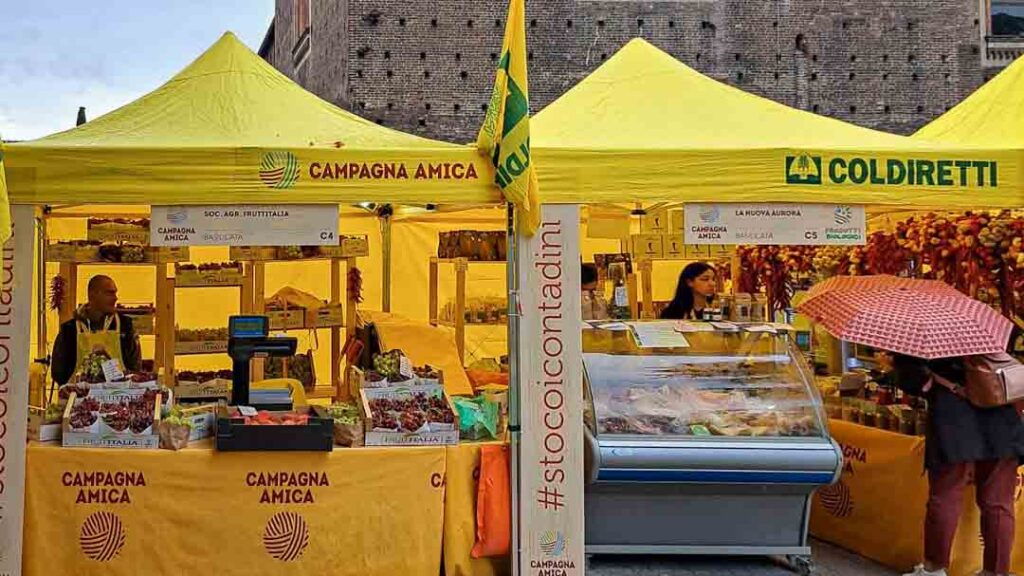
Some stalls carry a yellow flag — this is tied to Coldiretti and their “Campagna Amica” markets. These stalls are producers who sell their own goods directly, promoting freshness and authenticity. The yellow flag marks trust in rural and local production.
If you see that flag, it’s usually safer for quality. But still check for freshness.
👉 Read our article about The role of Coldiretti for more.
Clothes, Goods & Counterfeits
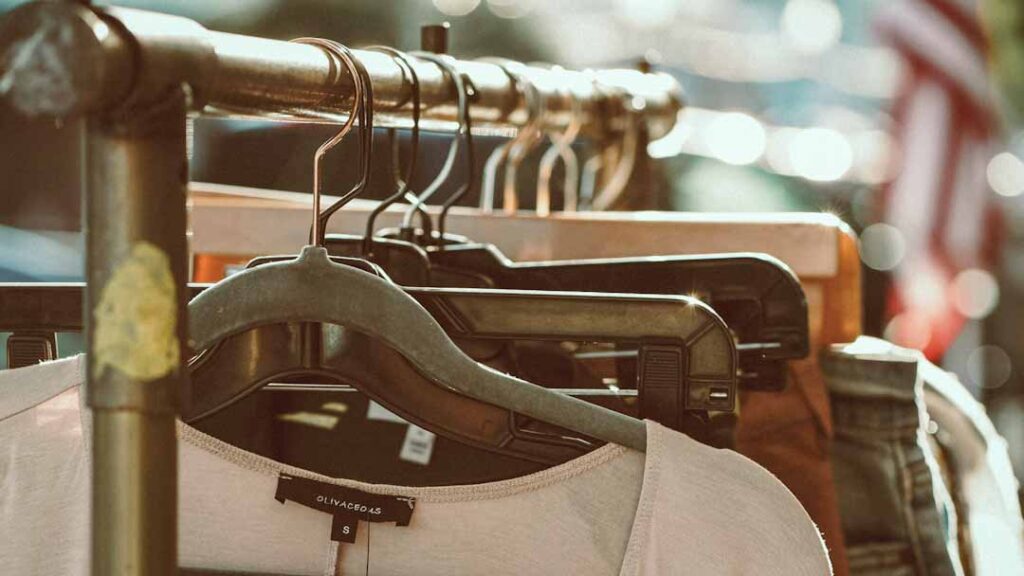
You’ll find clothing, shoes, handbags, and general goods. Some are mass imports, some local. A few may be knock-offs. In Italy, selling counterfeit goods is illegal. Police may or may not care, however be careful, fines can be steep.
If you see very low prices on designer logos, be cautious. You can write off the bargain if quality is poor. Always inspect stitching, tags, zippers.
How to Behave & How to Bargain
- Start with a polite greeting: Buongiorno or Buonasera depending on time.
- Browse quietly. Don’t touch items too wildly, especially food.
- Asking a price is fine: “Quanto costa questa cosa?” (How much is this item?)
- You can try mild bargaining — but mostly on non-food, non-fixed stalls, and not always.
- If the price is already low, bargaining may fail or annoy the seller.
- If seller refuses, smile and say “Grazie lo terrò in mente” and move on.
Specifics for Le Marche’s Markets
In Le Marche, large markets in towns such as Civitanova, Porto San Giorgio, Ancona, and Macerata draw many vendors. You’ll see bulky clothing, leather items, textiles, and food. These markets sometimes draw counterfeit sellers as well, especially for branded goods: stay alert.
If possible:
- Go early to get the best picks and avoid crowds.
- Wear comfortable shoes — many walk on stone or pavement.
- Bring a bag with you.
- Carry small cash — some stalls don’t accept cards.
Practical Tips & Local Respect
- Don’t get into loud arguments.
- If you buy food samples, always ask.
- Try local specialties — markets are a place to taste region flavors.
- Don’t block the aisles; walk on one side.
- Be patient: vendors may take brief breaks or chats with neighbors.
Key Takeaways
- Markets are weekly rituals and social hubs across Italy.
- Food stalls and producer stalls with Coldiretti yellow flag are often better trusted.
- Cloth and accessory stalls may include counterfeits, use caution.
- Bargaining is possible but limited, and best done politely.
- In Le Marche, large markets combine utility, tradition, and occasional risk.
Related articles:
• How to Order Coffee in Italy
• The Role of Aperitivo in Italy