
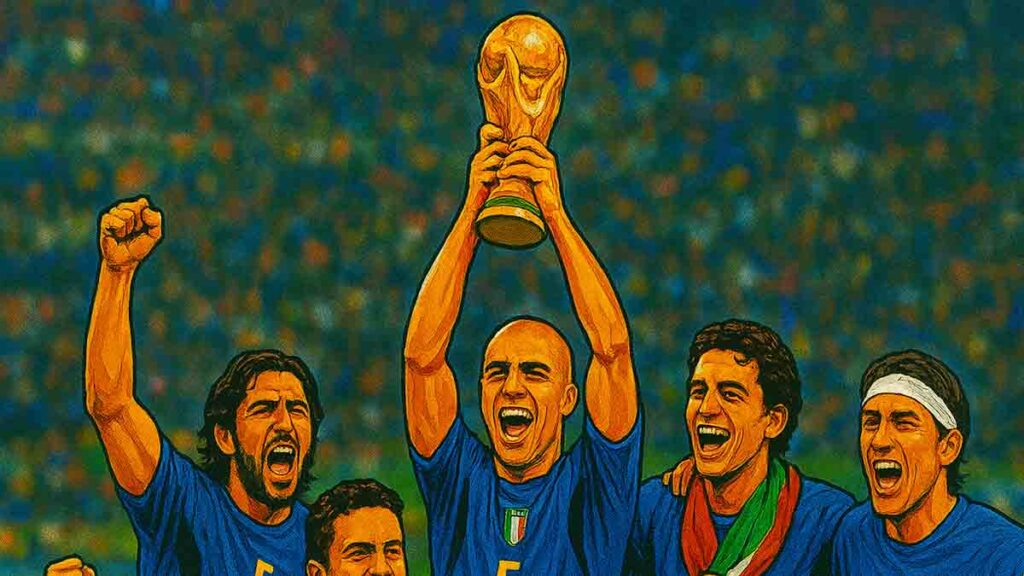
Calcio. Italy’s true obsession. Walk into any Italian bar, and you’ll hear someone talking about la partita, the football match. Arguments about the referee, heated debates about the manager’s choices. Some people reading through La Gazzetta dello Sport, others following updates minute by minute on their phones.
In this post, you’ll learn why football matters so deeply in Italy. We’ll explore how the game affects our lives, and how clubs bring pride to their cities. You’ll also find links to related articles about Serie A and Serie B, the Ultras phenomenon, the Fantacalcio fever, and how local football in Le Marche remains one of the region’s strongest passions.
The Origins of Calcio
We call it calcio or pallone. It arrived in Italy at the end of the 19th century, introduced by English sailors and merchants. The first official match was played in Turin in 1898, the same year that the FIGC (the Italian Football Federation) was born. From those beginnings, football quickly spread through schools and local associations.
In the early decades of the 20th century, calcio became part of national identity. It was a time when Italy was trying to define itself after unification.
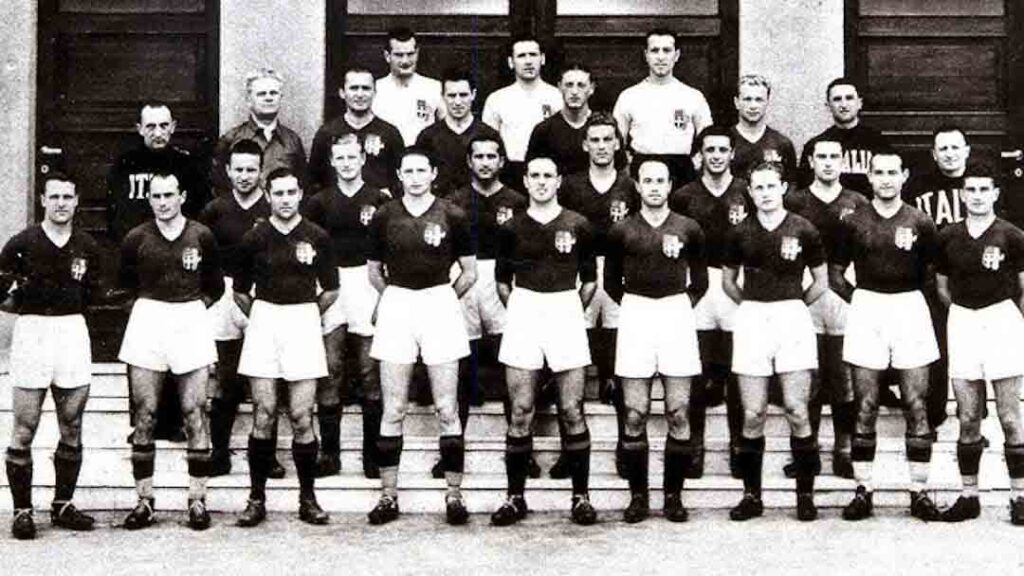
Football became a tool for unity, especially when the Azzurri, the national team, won the World Cups of 1934 and 1938, under Mussolini’s fascist reign. These victories made the sport a symbol of strength.
After the war, Italian cities had to rebuild their clubs. From North to South, every city wanted its own team, its own colors. Some big cities, like Milano or Genova, already had more than one team competing in series A, the main league.
Those who couldn’t attend games in person, would tune in on the radio, and listen to the famous reporters of the time such as Sandro Ciotti and Nando Martellini.
👉 To expand on the story of Calcio, read our article: The History of Football in Italy
Football as Social Identity
In Italy, supporting a team is choosing a family. Children are often born into colors: black-and-white for Juventus, red-and-black for Milan, blue-and-black for Inter. This loyalty passes from parents to children, generation after generation.
Football unites people, but it also creates fierce rivalries. Derby matches (Derby della Madonnina in Milan, Derby d’Italia between Inter and Juventus, Derby della Capitale between Roma and Lazio) can stop cities for a day or more. Bars fill up hours before kickoff, and the tension can be felt.
In smaller towns, local derbies have the same energy, even if the teams play in the lower leagues.
The Modern Game
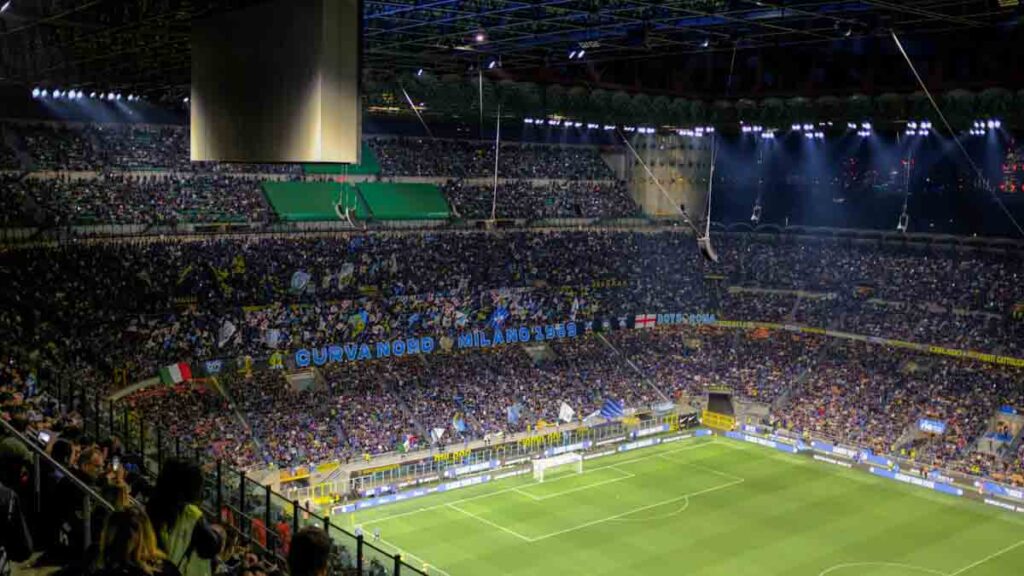
Today, football in Italy is still a tradition, but a huge business too. Serie A is followed worldwide, with millions of fans watching matches on TV and online. The modern stadium experience includes family areas, merchandising, and social media coverage.
On match days, Italian streets slow down.
Shops close earlier, and families gather to watch their team. It’s not unusual to hear screams from windows when a goal is scored.
Even those who don’t follow football closely still know the results of the big matches.
At the same time, football culture extends beyond the pitch. Fantacalcio (fantasy football) keeps the excitement alive during the week, as players check scores and argue about referees’ decisions that affect their formazione (line-up).
Local Passion in Le Marche
In Le Marche, the love for football runs just as deep. Most people follow the big national teams (Juventus, Milan, Inter) especially on television and in bars or pubs. It’s common for fans to organize trips to Milan or Turin to see their teams play, even if it means traveling hundreds of kilometers.
But true passion lies in the local teams too. Every town dream for its team to make it big: Ancona, Ascoli, Sambenedettese, Fermana, Maceratese, Civitanovese, and many others. Despite their glorious past, most of these clubs today play in the lower categories, sometimes semi-professional, and the dedication of their supporters is still strong. Many fans attend home and away games every weekend, following their team across the region. It’s football in its local form: less about fame, more about belonging.
👉 Related: Italian Football’s Hidden World: The Minor Leagues Explained
More Than a Game: Escaping the Everyday
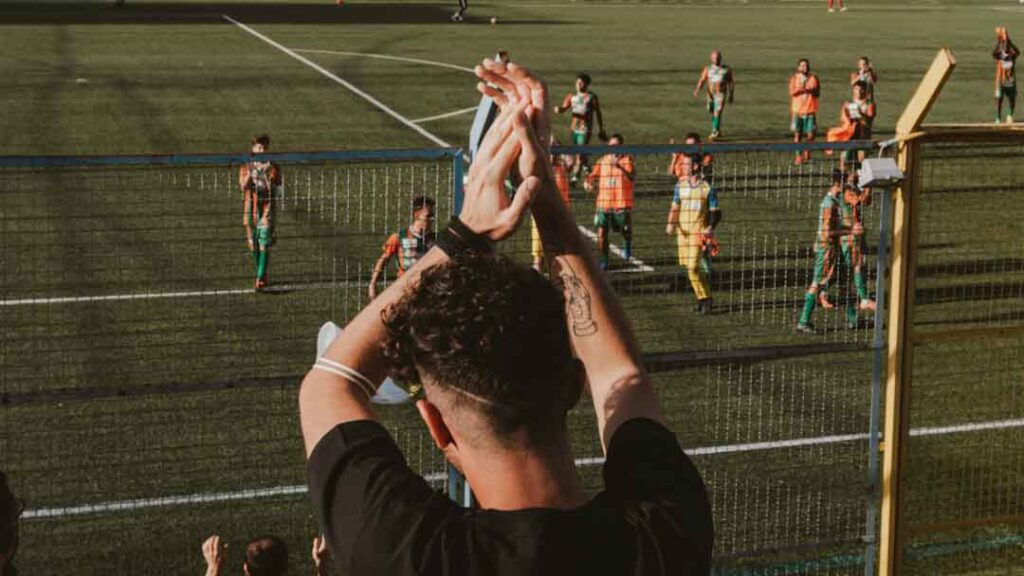
For many Italians, local football is one of the few ways left to represent their town with pride. In smaller communities, it’s the only arena where old rivalries between neighbouring towns still carry meaning. When a local team wins or loses an important game, the whole town feels it.
But calcio is also an escape from the dull rhythm of everyday life. On game days, fans leave behind work, routine, and social rules. Outside the stadiums, in the stands, they can let themselves go, shouting chants, waving flags, expressing emotions that would seem exaggerated anywhere else. It’s a rare moment of freedom and of course, this energy sometimes crosses the line. Local derbies can still lead to heated arguments or fights, a reminder that football reflects both the best and worst sides of community spirit.
👉 See Also: Italian Football Fans: The Ultras Explained
Key Takeaways
- Calcio is part of Italian identity, blending sport, culture, and emotion.
- The game’s roots go back to the 19th century and grew with Italy’s national story.
- Fantacalcio adds a modern, social twist to football passion.
- In Le Marche, fans follow both national and local teams with equal love.