
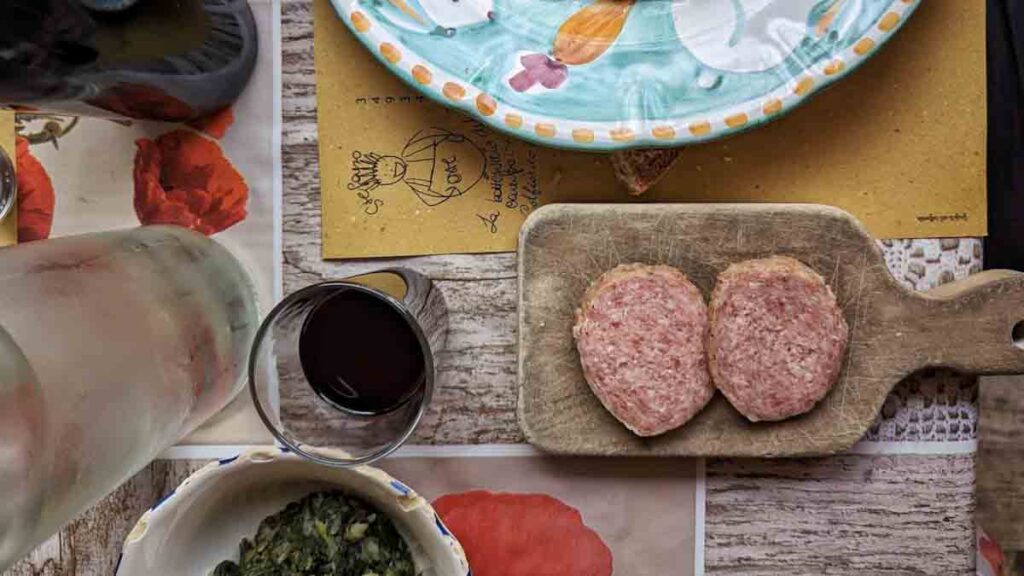
We the Marchigiani (the people from Le Marche) are deeply attached to our food and traditional cuisine. Even though the younger generations are intrigued by international dishes and modern food trends, the love for home cooking remains strong.
Most local recipes come from the tradizione povera (literally “poor tradition”), a legacy from times when families ate exclusively what their land had to offer. This is the foundations of all rural food traditions in Le Marche, where the seasons still guide ingredients and habits.
To celebrate these cycles and keep their roots alive, towns across Le Marche organize food fairs called sagre that bring whole communities together.
Spring: Renewal and Fresh Flavours
Spring marks the awakening of the countryside. Fields turn green again, and local markets fill with tender vegetables like asparagi selvatici (wild asparagus), fave (broad beans), and carciofi (artichokes). This is the time for light soups, fresh cheeses, and the first outdoor lunches of the year. Families prepare rich dishes made with the new-season produce.
In some towns, people still go out to collect erbe spontanee (wild herbs) for cooking or herbal infusions.
Easter comes with rich, symbolic foods like crescia di Pasqua, a tall savoury cheese bread, and roasted lamb, often shared during long lunches in the countryside.
Summer: Abundance and Celebration
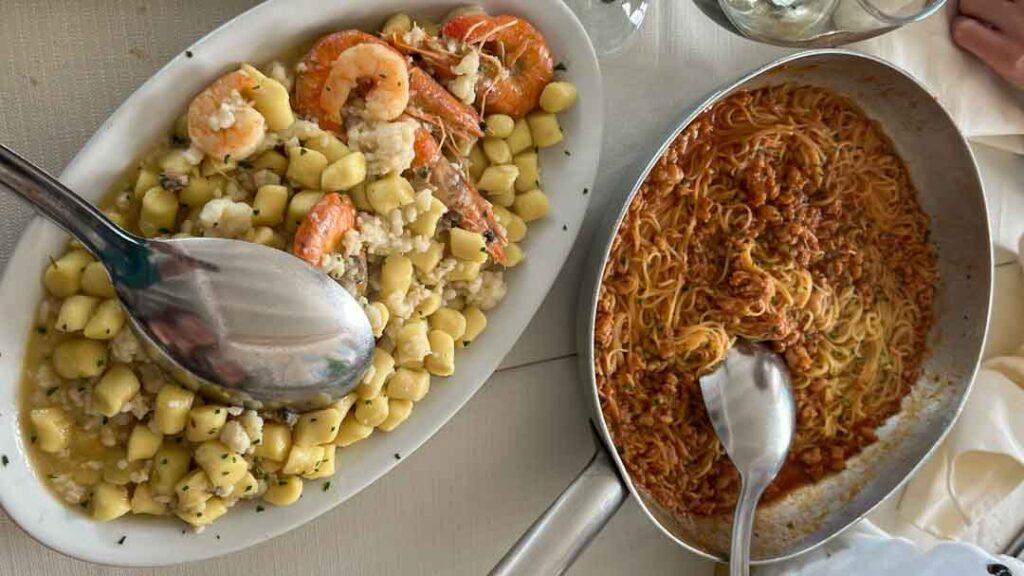
Summer in Le Marche is the season of abundance and joy. Gardens and farms offer tomatoes, courgettes, aubergines, and peppers. It’s also the time for sagre, small-town food festivals dedicated to one particular delicacy, where locals and visitors gather to eat, dance, and celebrate.
Traditional summer tables feature vincisgrassi (a local dish similar to lasagne but richer), and cold cuts from the hills. Some towns developed their own dishes and fests, like Monterubbiano with their tagliatelle fritte.
Along the beaches, crudi di pesce (raw seafood and fish), seafood pasta and fried or grilled fish dishes are a must.
Dessert often comes in the form of gelato artigianale, sorbetto or homemade ciambellone. It’s the perfect season to end meals with juicy fruit like melon, and, especially, cocomero (watermelon).
The warm evenings are also the ideal setting for open-air dinners, and community gatherings that often go late into the night.
Autumn: Harvest and Preservation

Autumn is one of the most important seasons for rural life in Le Marche. It’s the time of the olive and grape harvests, when families and friends gather to work the land together. This is when vino cotto is made and castagnate — chestnut festivals— take place in towns across the region.
The markets fill with mushrooms, truffles, pumpkins, and nuts. In the kitchen, hearty dishes return: polenta with sausage or wild boar, and soups made with beans and lentils.
This season carries a strong community feeling. It’s when old farming traditions resurface, and the bond between people and the land feels alive.
Winter: Comfort and Preservation
Winter brings a slower rhythm. Families spend more time indoors, preparing and preserving food for the colder months.
Typical winter dishes include trippa alla marchigiana (tripe in tomato sauce), brodo con passatelli, and stoccafisso all’anconetana. These are warming meals meant to be shared around a full table.
Even in the quiet months, Le Marche continues to celebrate food through small-town events and Christmas markets where local producers sell cheeses, cured meats, and traditional sweets like frustingo.
Winter overall is a time for comfort, and for long abundant feast during Christmas and New Year’s.
Key Takeaway
The food of Le Marche tells the story of a region where the land and its people remain closely connected. Every dish, from the simplest to the most elaborate, carries traces of history, hard work, and celebration. Through the seasons, cooking becomes not just a daily act, but a way of remembering who we are and where we come from.