
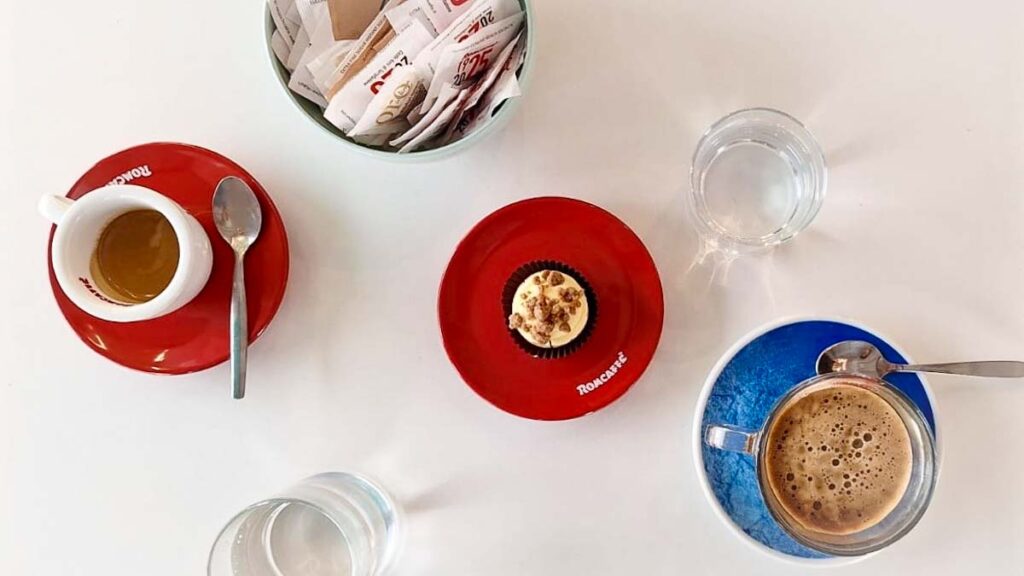
Ordering coffee in Italy is a daily ritual and an essential part of Italian culture. There’s much more than just espresso! This article explains everything you need to know about the different types of coffee, how they are served, local customs and tips to make your whole experience more enjoyable. Let’s get into it!
👉 For a broader overview of etiquette, see our guide: Italian Etiquette Guide.
Types of Coffee
When you ask for a caffè, you will typically be served an espresso, a small, strong shot of coffee served in a tazzina (small cup). There are several variations:
- Corto – A short, concentrated espresso.
- Lungo – A longer espresso with more water and a milder taste.
- Macchiato caldo – Espresso with a small amount of hot milk.
- Macchiato freddo – Espresso with a splash of cold milk.
- Cappuccino – Espresso with frothy milk, usually consumed at breakfast, often accompanied by a pastry.
- Caffè latte – Espresso with more milk, served in a larger cup.
- Latte macchiato – Steamed milk with a shot of espresso, typically layered in a glass.
- Deca – Decaffeinated espresso for those avoiding caffeine.
- Shakerato – Espresso shaken with ice, often served in the summer months.
- Ristretto – A very short, intense espresso.
Serving Style and Water
Coffee is traditionally served in a tazzina, but many bars offer it al vetro (in a small glass). It is customary to ask for a free glass of water (naturale or frizzante) to accompany your espresso. The water is meant to cleanse your palate before enjoying the coffee, but many people drink it afterwards.
Ordering Tips
- Use a polite greeting and simple phrases like “un caffè, per favore”.
- Avoid cappuccino after 11 a.m.; Italians usually only drink it at breakfast.
- To take your coffee to go, say “da portare via”.
- In a standing bar, pay at the counter; sitting at a table often incurs a small surcharge.
- Observe locals for tipping etiquette. In many bars, the price on the menu includes everything, but leaving a small coin is appreciated.
- Bars typically serve coffee with a small spoon on the saucer underneath the cup, and sugar is usually available on the counter and on tables. Asking politely for anything extra is still appreciated, but these basics are almost always provided.
Coffee Culture Insights
- Italians often drink multiple small espressos throughout the day rather than one large coffee.
- Coffee is a social ritual; many people stand at the bar and enjoy it quickly rather than sitting for long periods.
- Bars differ from cafés abroad; the experience is fast, efficient, and focused on quality rather than lingering.
Key Takeaways
- Caffè usually means espresso, with many variations including macchiato, cappuccino, and deca.
- Coffee can be served in a tazzina or al vetro, often with a free glass of water.
- Ordering etiquette, timing, and polite phrasing matter; following local customs improves the experience.
- Understanding coffee culture helps you blend in and enjoy authentic Italian bars.