
A trattoria is a simple, local Italian restaurant. It is less formal than a ristorante, and more casual than an osteria in many places. Trattorie focus on real, home-style food. This guide explains what a trattoria is, how it works, what to expect, and practical tips for visitors to Italy.
👉 Read Food and Rural Traditions in Le Marche to explore our local cuisine
What a trattoria is
Trattorie (plural for trattoria) are family-style restaurants. They are my favourite type of place because they serve local recipes, seasonal ingredients, and generous portions. Prices are usually modest.
The atmosphere is relaxed, service is friendly and unpretentious. Many trattorie are family-run and use traditional cooking methods. The menu may change daily or weekly, depending on what is fresh.
Trattoria vs ristorante vs osteria
Understanding the differences helps visitors choose the right place:
- Ristorante — formal, with printed menus, attentive service, and higher prices.
- Trattoria — informal, with simple dishes, local flavors, and good value.
- Osteria — originally a wine-focused spot with very simple food. Today the meaning varies. Some osterie are almost trattorie; others are tiny wine bars.
These terms are flexible. A place may call itself a trattoria but operate like a ristorante. In general, trattorie are the best choice for unpretentious, everyday Italian cooking.
Typical menu and dishes
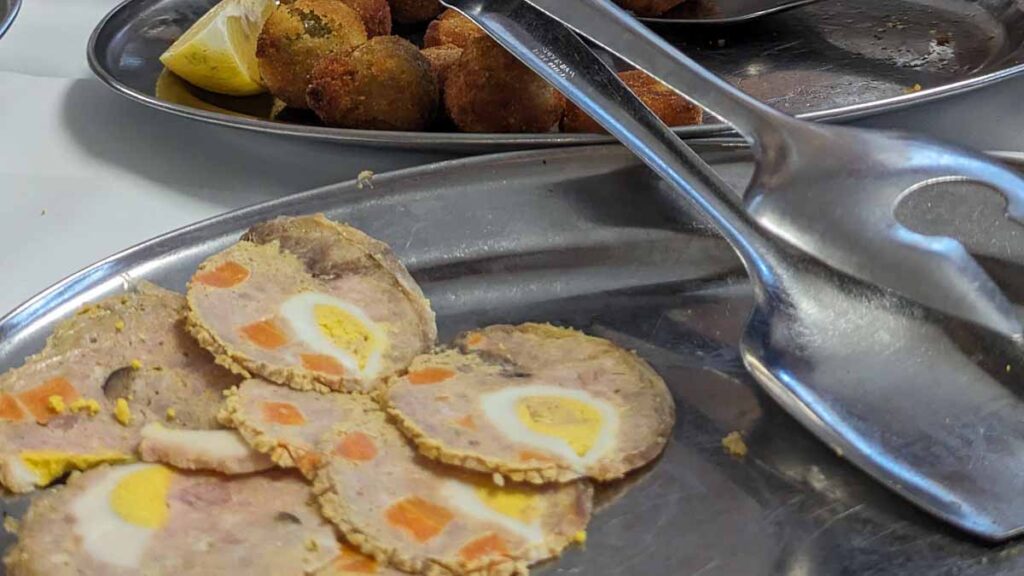
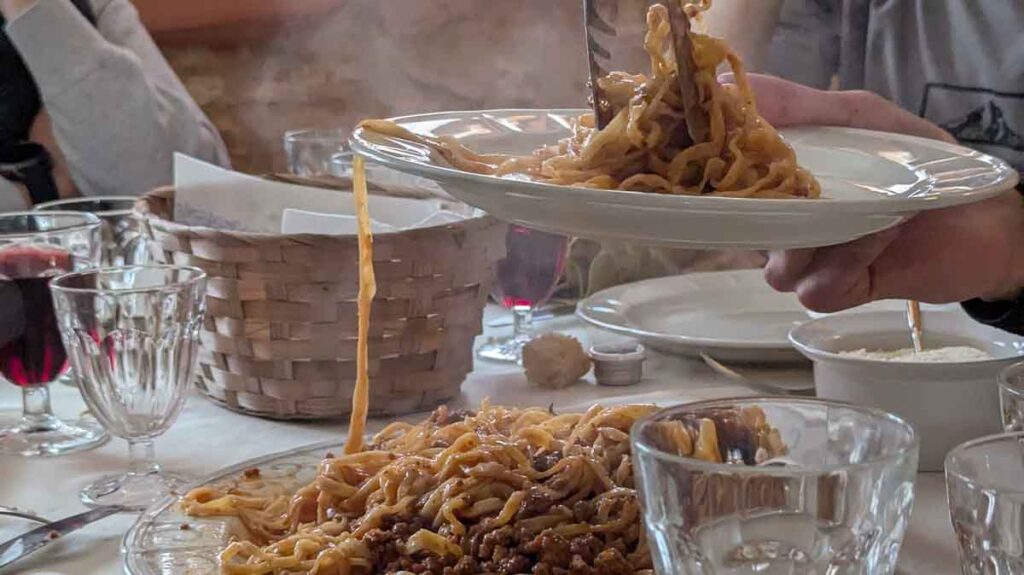
The menu depends on the region. In Le Marche you may find Olive Ascolane, Vincisgrassi, Tagliatelle Fritte, Maccheroncini di Campofilone. In Tuscany, Ribollita or Pappardelle.
Most trattorie offer:
- Antipasti — cured meats, cheeses, vegetables, fried bites.
- Primi — pasta, risotto, soups; often homemade.
- Secondi — meat or fish, roasted or stewed.
- Contorni — vegetables served as sides.
- Dolci — simple, homemade desserts.
- Caffè — mainly espresso and its variants.
- Ammazzacaffè — liqueur of your choice; also called digestivo (limoncello, grappa, and many other options).
Many trattorie also offer a menu del giorno (daily menu) or fixed-price lunch. These are usually excellent value.
A more Informal Service
Service in a trattoria is practical and friendly. Staff will not hover. Courses may arrive with less ceremony than in a ristorante. Bread is placed on the table without formality. Water may be from the tap unless bottled water is requested.
Tipping is modest. A small extra is appreciated but not required. Some places add a coperto (bread charge) or servizio (service fee), so check the bill.
👉 For more, check out: Tipping in Italy: Our Complete Guide
Reservations and timing
Reservations are useful for dinner, especially on weekends. At lunch, trattorie often serve locals, especially workers, looking for a quick, affordable meal. Many places close between lunch and dinner.
Typical hours:
- Lunch: 12:30–14:00
- Dinner: from 19:30 onward
When reserving, keep the message simple: name, date, time, and number of people. If you need to cancel, call early. For larger groups, ask about a fixed menu.
👉 Read our guide: How to reserve a table in Italy
How prices work
Trattorie are usually cheaper than ristoranti. Starters and primi piatti are reasonably priced. Secondi cost more but stay accessible.
Local wine is usually affordable by the glass or carafe. If you want a cheap, safe option, ask for vino della casa (their chosen home wine).
The authenticity test
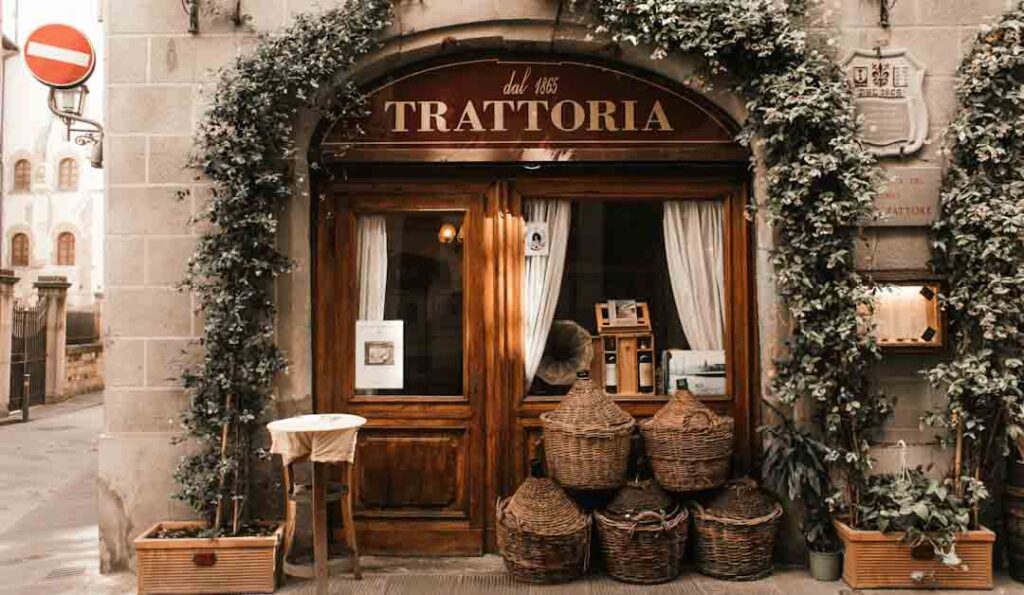
You have found a real trattoria if:
- The menu features local dishes.
- You see local customers who know the staff.
- The decor feels authentic, not staged.
- Smells from the kitchen match what is served.
- The wine list includes local producers.
Dietary needs
Trattorie may not be as flexible as restaurants, given they usually provide less dishes on their menu.
Vegan and vegetarian dishes and gluten-free options are increasingly common, but small family-run places may have limits. Calling the place in advance is highly recommended.
If you have allergies, state them clearly. Use simple Italian phrases like “Ho un’allergia a…”.
What to order for a local experience
Ask for daily specials: “Cosa c’è oggi?”. Try a primo and a secondo to experience the range of local cooking. Consider sharing an antipasto. Finish with espresso.
Why choose a trattoria
A trattoria gives you a taste of everyday Italy. Recipes are often passed down through generations. The food is simple, and rooted in tradition. For travelers, this is one of the most authentic food experiences available.
When a trattoria may not be right
If you want elaborate presentation or experimental cuisine, choose a ristorante. For very formal occasions, a trattoria might feel too casual. For strict dietary needs, contact the place in advance.
Key takeaways
- A trattoria is an informal, often family-run Italian restaurant.
- Expect simple dishes, local ingredients, reasonable prices, and friendly service.
- Reservations help, especially for dinner.
- Ask for daily specials for the best experience.
- Choose a trattoria for honest, traditional Italian food.